
Year: 2024
Nanoscale gratings model in Nature Communications

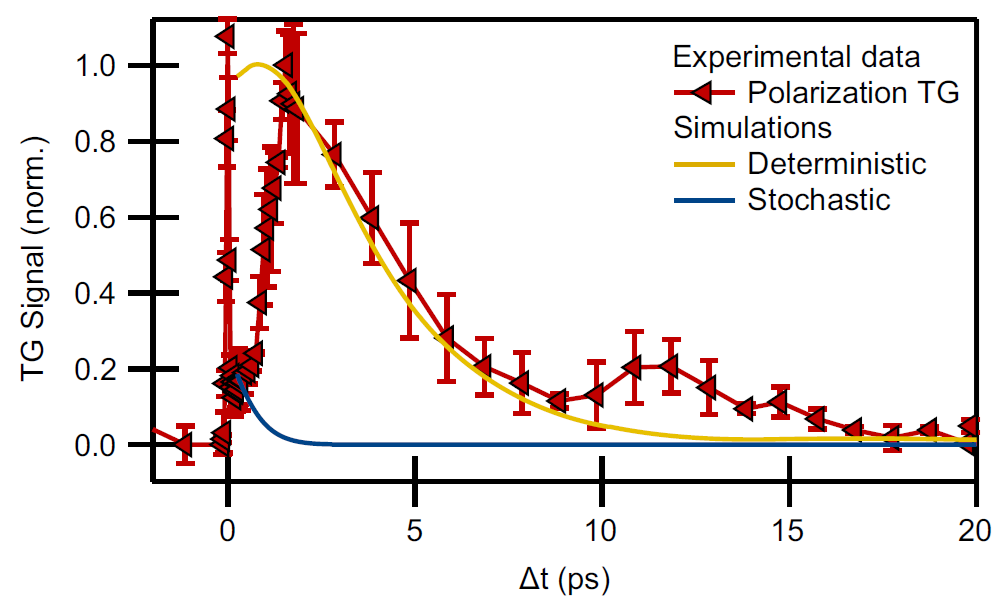
The first demonstration of polarization transient gratings has been published in Nature Communications. Congratulations to Laura Foglia and the extraordinary experimental team behind this achievement.
Congratulations to Matt Copus too who completed the extension of the pseudospectral model to 2D and was able to model the spectral response of polarization transient gratings. This work opens new possibilities for the pseudospectral model in the ultrafast regime.
Pumping magnons with solitons
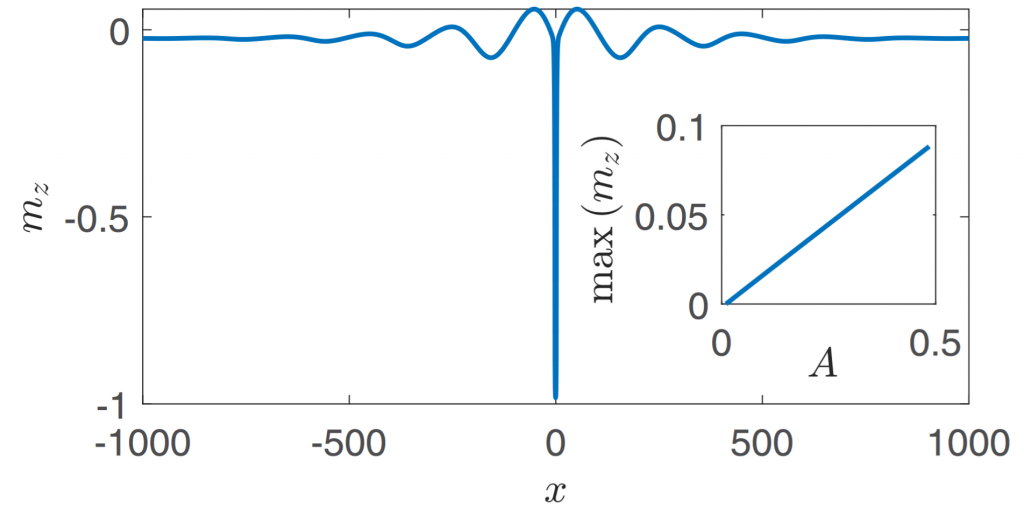
Congratulations to Medhanie who published his work on spin hydrodynamics on Phys. Rev. B 110, 174424 (2024). This work shows that a rather special solution called a contact soliton dissipative exchange flow can be modulated by spin injection, in turn pumping magnons into the ferromagnetic channel.
This work also extended our pseudospectral Landau-Lifshitz model with spin transfer torque and demonstrated the importance of correctly manage the exchange energy when solitons are present in the system due to their sharp domain walls.
Successful comps for Kyle
Congratulations to Kyle who passed his comprehensive exam and is now a Ph.D. candidate. Well done!
Ferromagnetic resonance in 3D tilted ASI
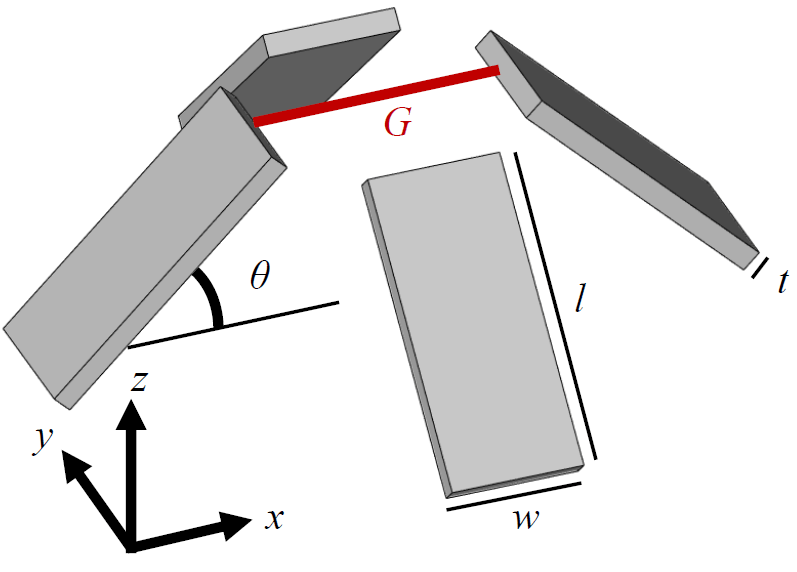
Congratulations to Ghanem and Ally who published a joint paper in the semi-analytical and numerical investigation of 3D artificial spin ices. This work is the first to explore this challenging geometry from two numerical perspectives.
This work shows not only the advantages but also the issues that different models present when exploring 3D geometries.
Iacocca gives seminar at Los Alamos Natl Lab
Prof. Iacocca gave a talk about our recent DOE-sponsored work at Los Alamos National Laboratory. Very interesting visit and discussions with the staff at the T4 division.
Iacocca gives seminar at UC Davis
Prof. Iacocca gave a talk about our recent work on the PS-LL model at the University of California Davis.
First magnetism retreat
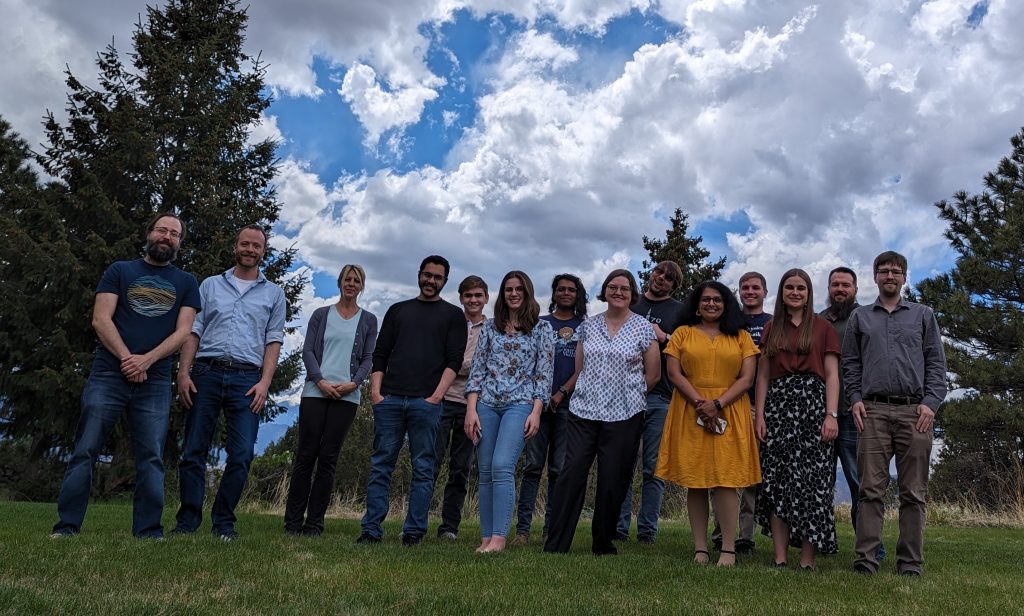
We held of first magnetism retreat where all members from our group and Prof. Bozhko’s group met to present their yearly achievements.
The event was quite fun and we are looking forward to establish it as a tradition in our department!
3D spin ice published in Nature Communications
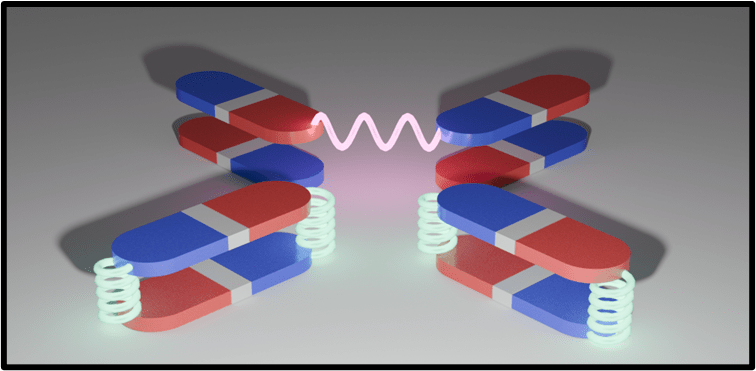
Our collaborative work on 3D artificial spin ices was just published on Nature Communications. The work combines very nice experimental work lead by Imperial College London as well as numerical simulations, Brillouin light scattering, and calculations using our in-house semi-analytical code Gænice.
We obtained very good agreement with experiments by combining our method to numerical estimate diagonalized demag factors and semi-analytical FMR calculations. This work demonstrated Gænice’s application to 3D spin ice geometries.
Matt Copus joins the group

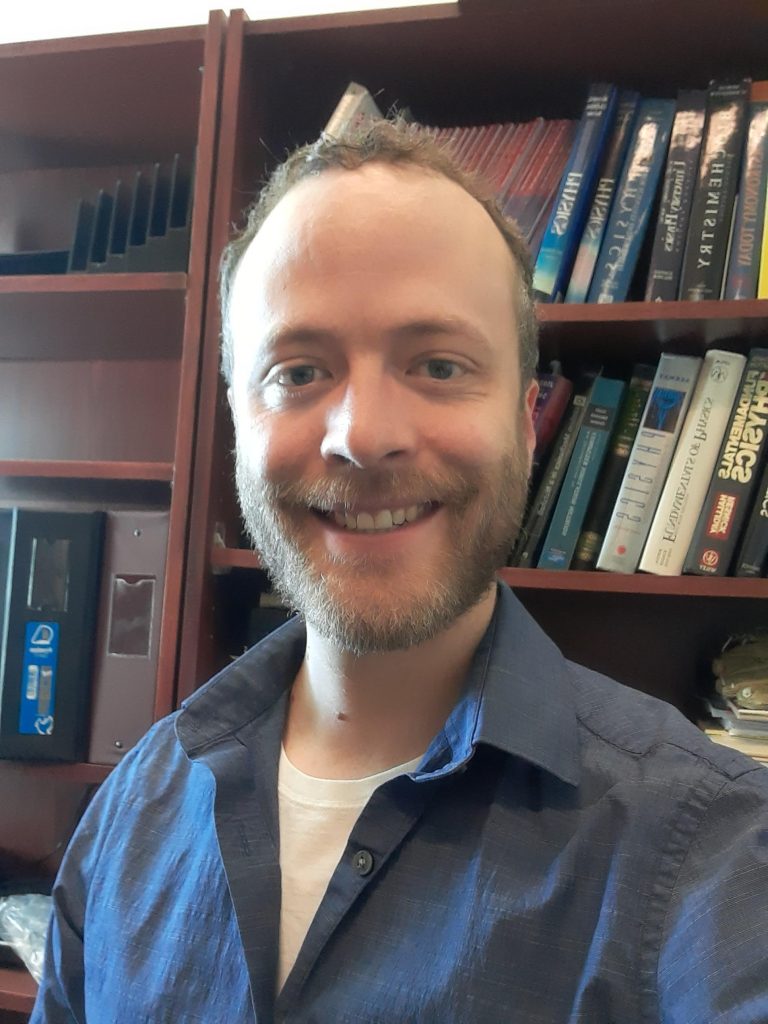
We are very happy to welcome Matt Copus to the group as a postdoctoral scholar. Matt comes with experience closely related to the group’s research, both micromagnetic simulations and spin wave dispersion.
Pseudospectral method resolves atomic scale dynamics
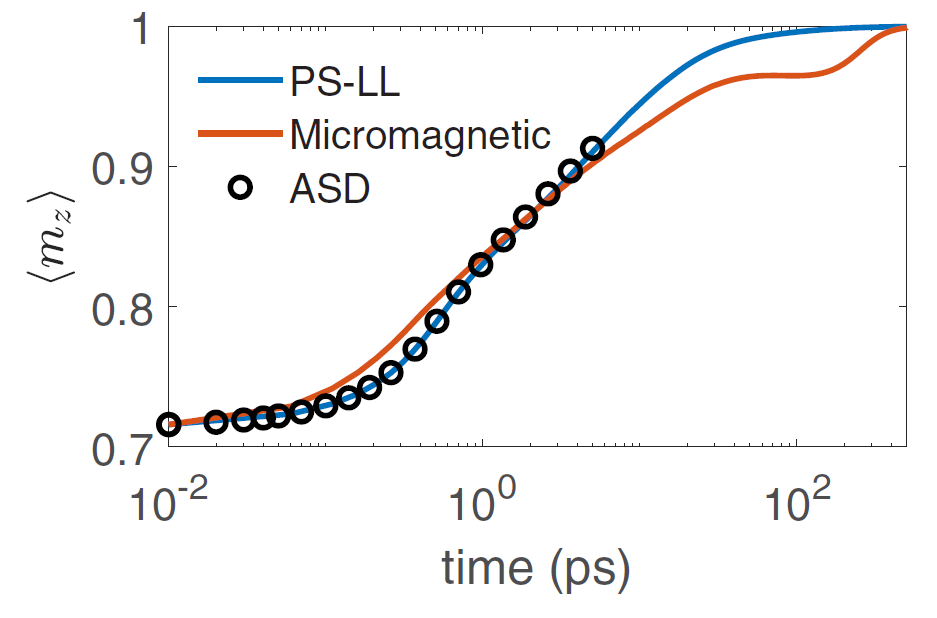
We have published a new continuum method that resolves atomic-scale magnetization dynamics with good accuracy. The method is pseudospectral and so is amenable to analytical calculation. Limiting cases of modulational instability (a long-wave phenomenon) and transient grating (a regime where long and short waves co-exist) were resolved in excellent agreement with atomistic spin dynamics. We expect this model to be the foundational stone for a better modeling of topological textures.
Fantastic work by Kyle Rockwell on this research and special thanks to our international collaborators Joel Hirst and Thomas Ostler.
This research was supported by the U.S. Department of Energy, Office of Science.